

This move has been driven by the implementation of emission control areas, particularly within European and North American waters, which have restricted emissions of sulphur, nitrogen oxide and particulate matter, as well as by global IMO regulations on sulphur emissions.
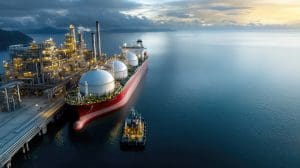
The transition to LNG propulsion
This change in regulatory environment has led many merchant and cruise liner fleets to adopt LNG for the maritime propulsion systems of their recent vessels. Compared to HFO, the use of LNG allows substantial reductions in regulated emissions and carbon dioxide and is therefore considered a more environmentally friendly fuel. However, in terms of its explosive atmosphere risk, LNG is significantly more challenging than the more chemically stable and less reaction HFO.
The highest safety concern for crews accustomed to HFO operation is the comparatively high energy content of LNG storage and the explosion risks associated with leakage. Bulk onboard storage of fuel is typically in liquid form within a cryogenic tank, with vaporiser systems converting the fuel to gaseous form as it is fed to the engine. The design of LNG vessel propulsion systems will be in accordance with ATEX requirements and will include the specification of onboard fuel storage and engine supply, monitoring, fire-fighting measures, and escape procedures.
It is essential that all those working on board and in port-based LNG bunkering operations have the training and knowledge to work safely within this potentially explosive environment. In addition, operatives will also need to be aware of the more general risks associated with the use of flammable liquids and vapours, for example, those associated with the operation of the lubrication and hydraulics systems of large ocean-going vessels.